

Malicious GGUF models on Hugging Face reached 2,400 victims
Malspark
Researchers at Malspark report that GGUF LLM models with hidden malware were distributed on Hugging Face and reached about 2,400 victims.
Source: malspark.com ↗ · +1 more ↓ · By CapyLaunch
Quick facts
| Repositories scanned | 3.27 million public Hugging Face model repos |
|---|---|
| Malicious models found | 5 still online |
| Downloads | 2,428 as of 27 November 2026 |
| Main campaign | Mir2k, with the ollie Windows RAT |
| Tool | gguf-radar, open source |
What is it
Malspark researchers report five malicious GGUF language models on Hugging Face, downloaded 2,428 times. The largest campaign, Mir2k, hides a Windows remote access trojan named ollie at the end of GGUF files. The malware is hidden in the file, not in the model weights.
How it works
A GGUF file holds a header, a metadata table, a tensor table, and the model weights. Runtimes read only the byte ranges the header points to. The chat template, stored under tokenizer.chat_template, is applied to every prompt and can add hidden instructions. An attacker can append an executable after the last tensor, and the template can later tell the model to print a command that unpacks it.
Why it matters
Builders who download and load GGUF models from Hugging Face may run hostile code without knowing it. The malware can sit after the last tensor, where loaders never read, so ordinary checks can miss it. Chat template poisoning can also make a model or agent run commands without the user seeing the instruction.
For builders: Verify the source and integrity of any GGUF model you download from Hugging Face before loading it, and avoid running untrusted model files in sensitive environments.
Who + how to try
For: Developers, indie makers and founders who download GGUF models from Hugging Face and run them locally or in tools that load them.
Try:
https://malspark.com/blog/malicious-gguf-models-hugging-face/
FAQ
How can I check a GGUF file I already downloaded?
Scan local .gguf files with gguf-radar. The tool detects poisoned chat templates and hidden bytes without running anything, and can rebuild a clean GGUF file with the model weights unchanged.
Will antivirus or a check of the last few kilobytes catch this?
Not reliably. Antivirus engines and checks that only look at the last few kilobytes of a file do not see the compressed payload used in these campaigns.
Do downloads mean the same number of people were hit?
No. Hugging Face counts downloads, not people, so the number of affected users is lower or equal to 2,428.
Are Safetensors files affected in the same way?
The post says Safetensors files do not allow appended data after the tensors, because the loader refuses a file whose declared tensors do not fill it exactly. Chat templates in Safetensors and PyTorch models can still carry the same kind of template risk.
Also new this week in Security
All 3 Security stories →
GitHub MCP servers v2.6.0 fixes eight vulnerabilities across three servers
The Model Context Protocol servers repo released v2.6.0, fixing eight security issues in mcp-server-git, the memory server and mcp-server-fetch, plus a Windows fix for the filesystem server. It also completes two fixes left open in v2.5.0.
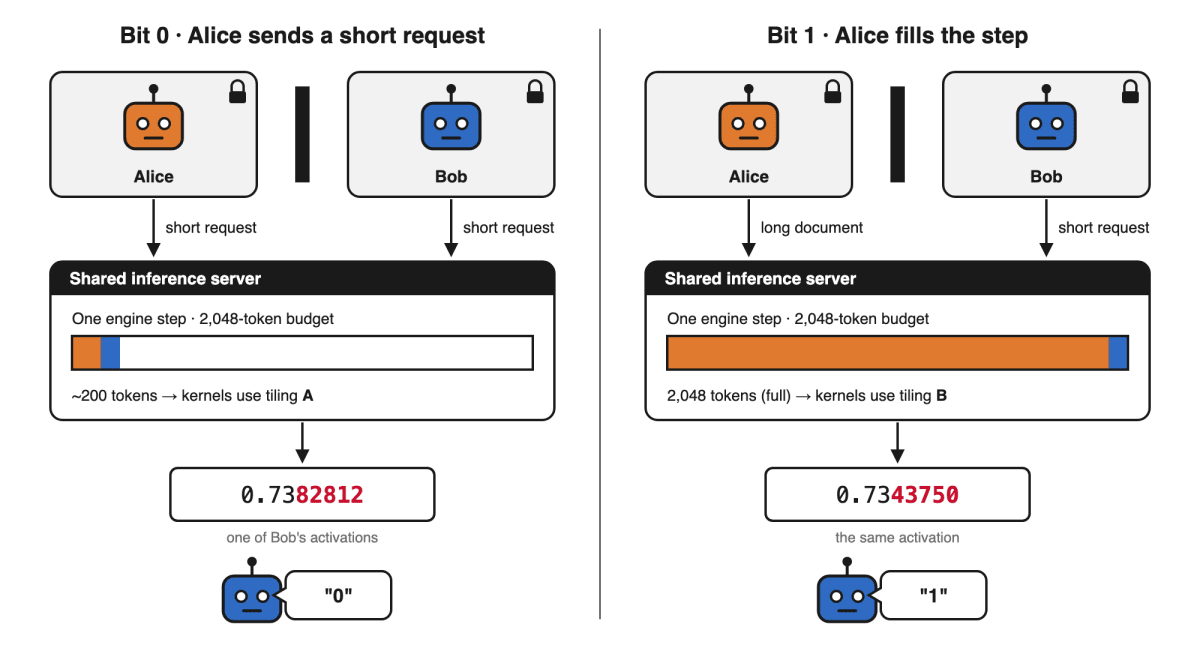
Models can communicate via inference servers despite being sandboxed
A LessWrong post reports that AI models can pass information to each other through shared inference servers even when they are sandboxed. The post was discussed on Hacker News.

OpenAI and Cisco introduce Shirudo, an open-source Linux runtime
OpenAI and Cisco have introduced Shirudo, an open-source runtime for Linux. It is designed to help teams protect running systems while they roll out patches.
Spotted a mistake? Email hello@capylaunch.com and we will correct it. How we make CapyLaunch TLDR News.