AI NEWS FOR BUILDERS

CapyLaunch News

New AI models, tools, releases and research, explained in plain English with what each one means for people building products. Every story is checked by a person before it goes live.

Developer tools

LangChain releases langchain-perplexity 1.5.0 and langchain-tests 1.2.0

LangChain published new versions of its Perplexity integration package (1.5.0) and its test utilities package (1.2.0). The changes drop Python 3.10 from partner packages and include several dependency patches and bumps.

For builders: If you use LangChain's Perplexity integration or its test helpers, check your Python version, since 3.10 support has been removed, and review the dependency updates before upgrading.

Models

GLM-5.4 released with a first loop transformer for coding

Z.ai has published GLM-5.4, described as a step toward generalized coding and its first model built on a loop transformer architecture. The announcement drew 209 points on Hacker News.

For builders: If you rely on coding models, GLM-5.4 is a new option to evaluate, and its loop transformer design is a different architecture worth checking against your own tasks.

Models

Inkling 2 Mini added to Hugging Face transformers v5.24.0

Transformers v5.24.0 adds Inkling 2 Mini, a multimodal text and image model from Thinking Machines Lab with 24 decoder layers and looped layers. A research checkpoint supports a variable number of loop passes, trading speed against quality.

For builders: If you run local or self-hosted models, you can now load Inkling 2 Mini through transformers and choose how many loop passes to trade speed for quality.

Developer tools

Claude Code v2.1.330 adds enterprise sign-in and self-hosted runner options

Claude Code v2.1.330 adds sign-in to organizations managed in Anthropic's Enterprise Admin Console, a built-in charting mod, and a start-directory option for the self-hosted runner. It also adds clearer plugin install reporting.

For builders: Teams using Claude Code with an enterprise account can now sign in to their organization's settings, and self-hosted runner users can point sessions at a specific repository folder.

Open source

OpenComputer: open source cloud coding agent you can run in your own cloud

OpenComputer is an open source cloud coding agent that runs in your own AWS, GCP or Azure account, using one durable VM per team. The founders report a first commit in 24 seconds versus 53 to 72 seconds for alternatives they benchmarked.

For builders: If you are building a coding agent for a team, this shows an architecture option: one persistent VM per team with session files backed up to a repo for resumption.

FROM THE DIRECTORY

Products builders are launching

Browse the directory

Research

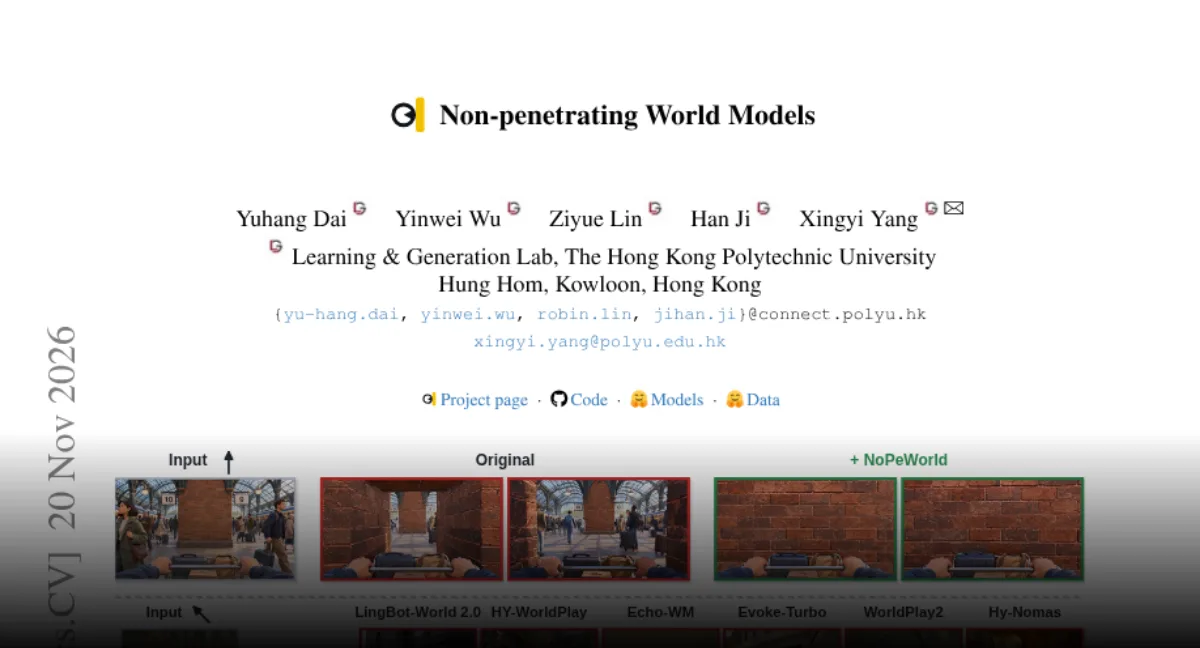
NoPeWorld: stopping object penetration in video world models

Researchers introduce NoPeBench to test how video world models handle obstacles and NoPeWorld, a small head trained on frozen diffusion transformer states that flags and replaces penetrating actions. Reported violation rate drops from 74% to 16% across six models.

For builders: If your product uses video world models for simulation or interaction, a lightweight safety check on hidden states may reduce physically impossible outputs without retraining the base model.

Research

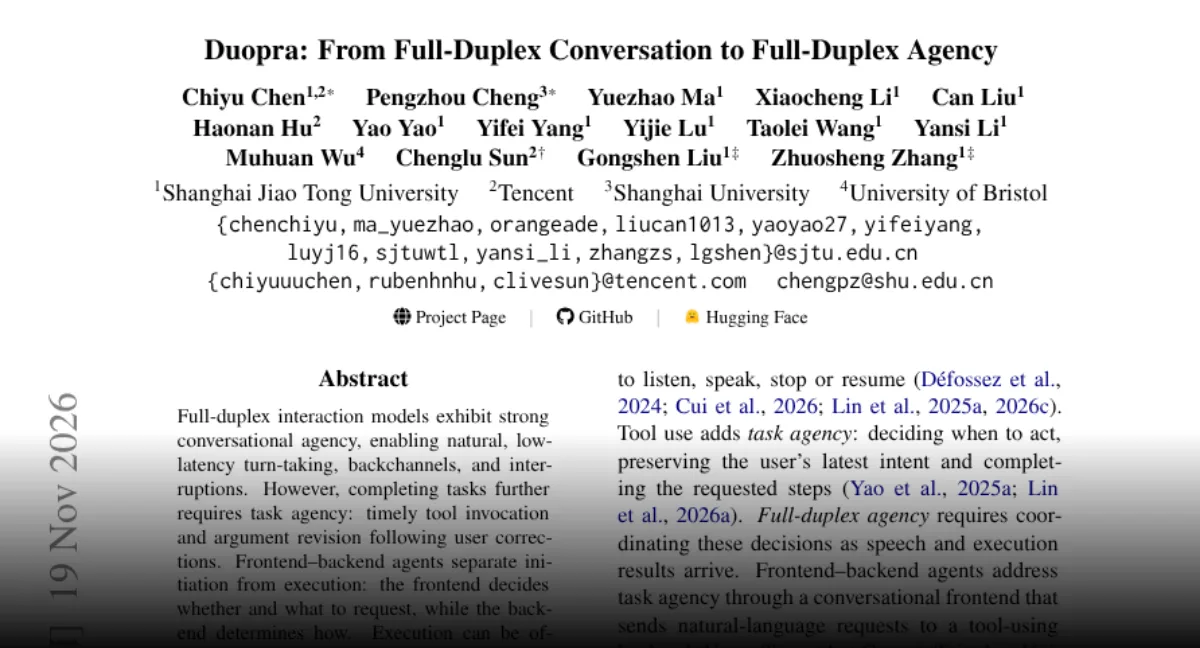
Duopra: full-duplex models that also execute tasks through a backend

Duopra is a full-duplex interaction model that treats a backend as a tool and learns to invoke and revise tool requests during live conversation. It is trained in three stages including reinforcement learning rewarding timely, complete execution.

For builders: If you build voice agents that must call tools mid-conversation, this paper describes how to handle timing and argument corrections more reliably than separate frontend and backend agents.

Models

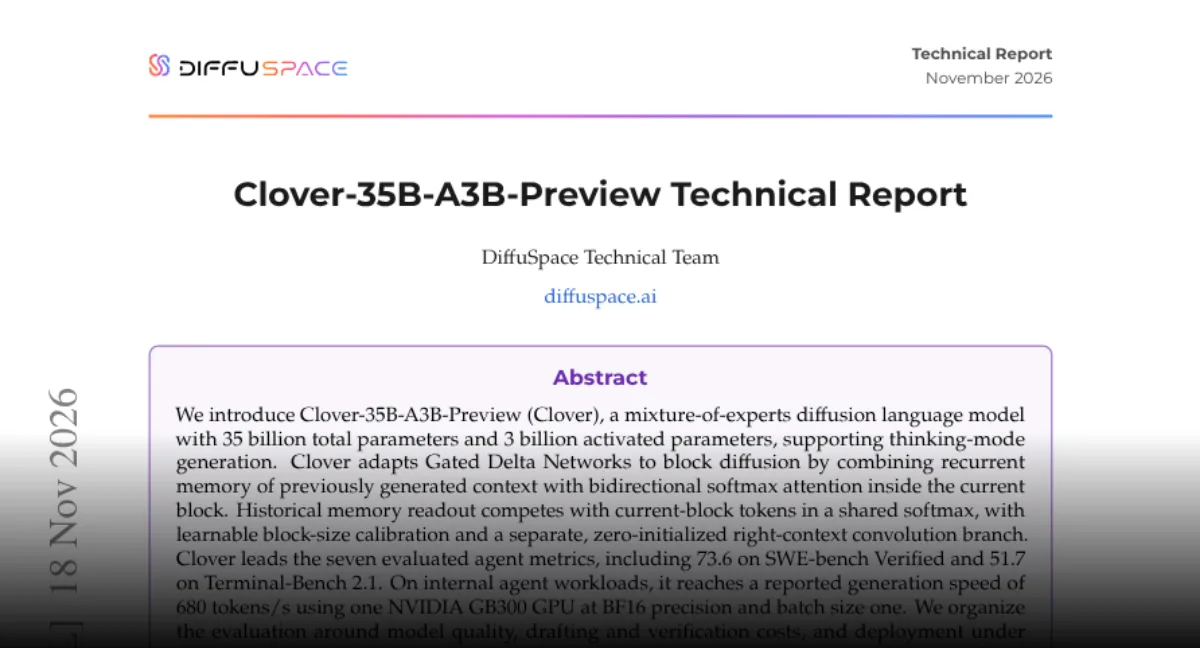
Clover-35B-A3B-Preview: diffusion language model reports SWE-bench 73.6

Clover is a 35 billion parameter mixture-of-experts diffusion language model with 3 billion active parameters and thinking-mode generation. The report cites 73.6 on SWE-bench Verified and 51.7 on Terminal-Bench 2.1, and 680 tokens/s on one GB300 GPU.

For builders: If you care about generation speed for agent workloads, this diffusion approach reports strong coding benchmarks and throughput on a single GPU, though it is still a preview.