

I2VT transfers image editing skills to video editors without new video data
Hugging Face papers
Image-to-Video Transfer uses an image editor to guide a pretrained video editor, treating single images as one-frame videos. The authors also extend their benchmark, OpenVE++, with four new tasks including action changes, expression changes and scene relighting.
Source: huggingface.co ↗ · By CapyLaunch
What happened
Image-to-Video Transfer uses an image editor to guide a pretrained video editor, treating single images as one-frame videos. The authors also extend their benchmark, OpenVE++, with four new tasks including action changes, expression changes and scene relighting.
Why it matters
For builders: If you build video editing features, this approach suggests you can improve and extend a video editor using only image data, avoiding costly paired video datasets.
Also new this week in Research
All 33 Research stories →
Mixture-of-Loops Transformer reuses layers to improve expressivity and efficiency
Researchers introduce MoLT, a looped Transformer that passes keys and values between loops as memory instead of the full residual stream. The U-shaped variant reportedly outperforms OLMo3 across 700M, 1.5B dense and 3B MoE models in 400B-token pretraining.
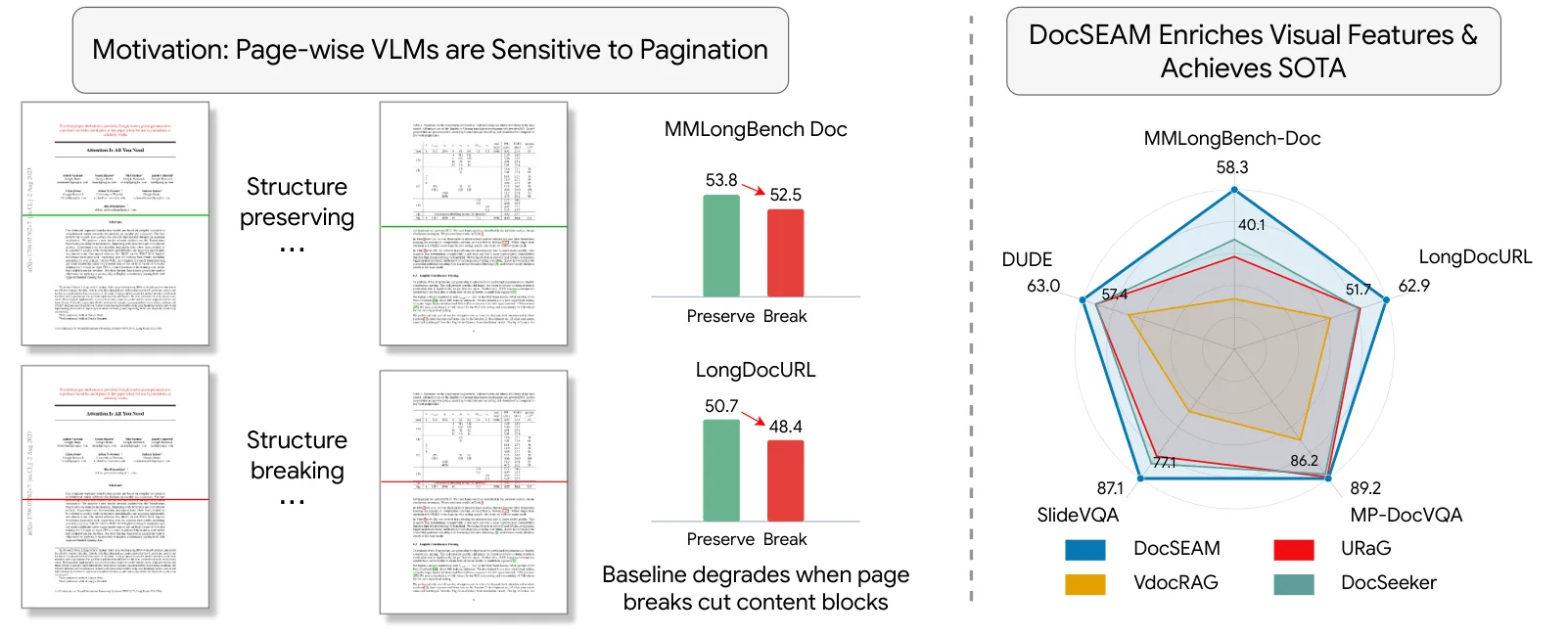
DocSEAM: cross-page encoding for multi-page document VQA
Researchers propose DocSEAM, a lightweight module that lets a vision-language model use content from neighboring pages when reading multi-page documents. A 9B-parameter model using it reports state-of-the-art results among open-weight models up to 10B on five multi-page document VQA benchmarks.
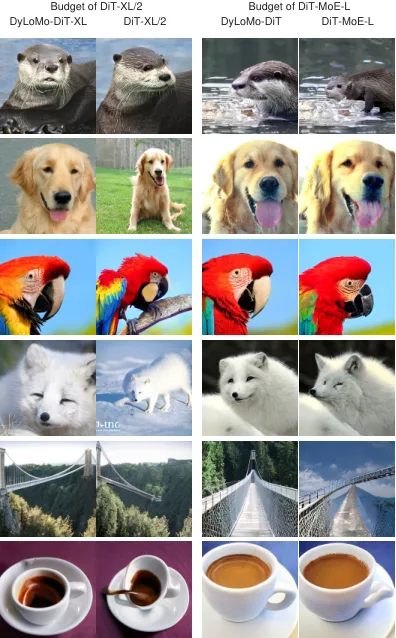
DyLoMo-DiT reuses weights in diffusion transformers for better quality per parameter
DyLoMo-DiT combines a weight-shared loop over middle layers with sparse mixture-of-experts, and varies the number of passes by noise level. The authors report lower FID than DiT and DiT-MoE on ImageNet, and a higher GenEval score than FLUX.1 with under a tenth of its active parameters.
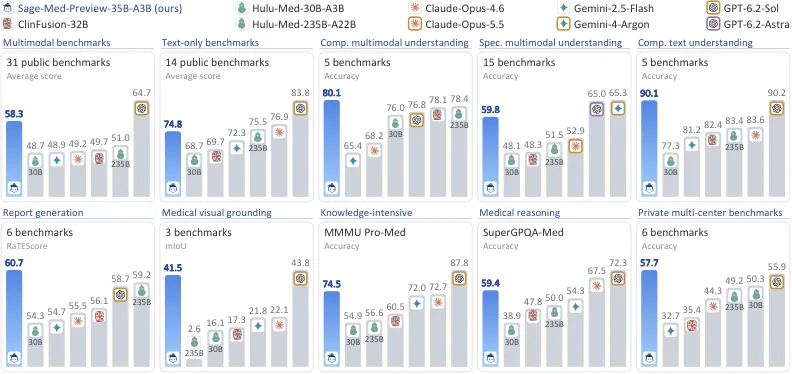
Sage-Med-Preview: 35B medical multimodal model with 3B active parameters
Researchers introduced Sage-Med-Preview, a 35B-parameter medical multimodal model with 3B activated parameters. They report it was evaluated against 77 competing models across 238 clinical tasks.
Spotted a mistake? Email hello@capylaunch.com and we will correct it. How we make CapyLaunch TLDR News.