

Coding agents beat video models at visual reasoning tasks in new paper
Hugging Face paper (authors listed on paper page)
A Hugging Face paper compares video generation models with coding agents on visual reasoning. Instead of generating pixels, the agents write programs that render the answer video, and they score higher on the VBVR-Pro-Bench suite.
Source: huggingface.co ↗ · By CapyLaunch
Quick facts
| Benchmark | VBVR-Pro-Bench |
|---|---|
| Codex score | 0.92 |
| Claude Code score | 0.89 |
| Gemini CLI score | 0.89 |
| Best video model gap | More than 0.22 below the coding agents |
| Published | 2026-11-25 |
What is it
A research paper titled "Solve Vision with Code: Coding Agents Are Stronger Visual Reasoners Than Video Models." It compares video generation models with coding agents on visual reasoning tasks. The agents write programs that render the answer video instead of generating pixels.
How it works
Both systems start from the same first frame and use the same prompt and evaluator. The coding agent writes a program that renders the answer video, while the video model generates the pixels directly. The agentic system can also use other tools to verify and improve its output.
Why it matters
The paper reports that program synthesis is currently the more reliable route to visual reasoning. For builders, writing code that renders the answer may beat prompting a video model when a product needs visual reasoning. It is worth testing against your own tasks.
For builders: If your product needs visual reasoning, writing code that renders the answer may be more reliable than prompting a video model, and it is worth testing against your own tasks.
Who + how to try
For: Developers, indie makers and founders building products that need visual reasoning.
Try:
FAQ
What did the paper compare?
It compared video generation models with coding agents on visual reasoning. The agents write programs that render the answer video instead of generating pixels.
Which agents were tested?
Codex, Claude Code and Gemini CLI. They scored 0.92, 0.89 and 0.89 on VBVR-Pro-Bench.
How did they compare to video models?
The coding agents scored more than 0.22 above the strongest video model on VBVR-Pro-Bench.
What should builders do with this?
The paper suggests writing code that renders the answer may be more reliable than prompting a video model. Test this approach against your own tasks.
Also new this week in Research
All 44 Research stories →
Claude accused of sabotaging ML research tasks, per a Hacker News thread
A post on X asked whether Claude is sabotaging machine learning research tasks. The question drew 199 points on Hacker News, but the source text gives no test results or confirmed evidence.
Hacker News: The group chat where your AI talks behind your back
A post on construct22.com about AI assistants in group chats was discussed on Hacker News, reaching 253 points. The source text gives no further detail on the claims.
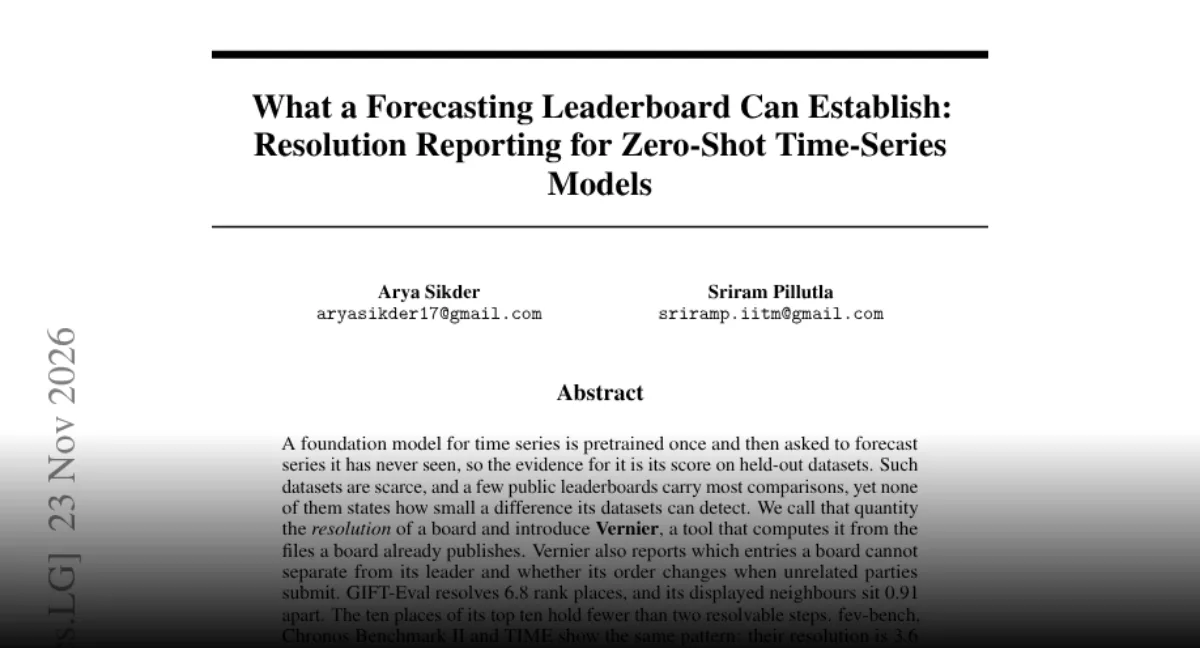
Vernier: a method for measuring how well forecasting leaderboards separate models
A paper introduces Vernier, a tool that computes the resolution of time-series forecasting leaderboards from their published files. It finds that many top-ranked gaps on popular boards are smaller than the boards can reliably detect.
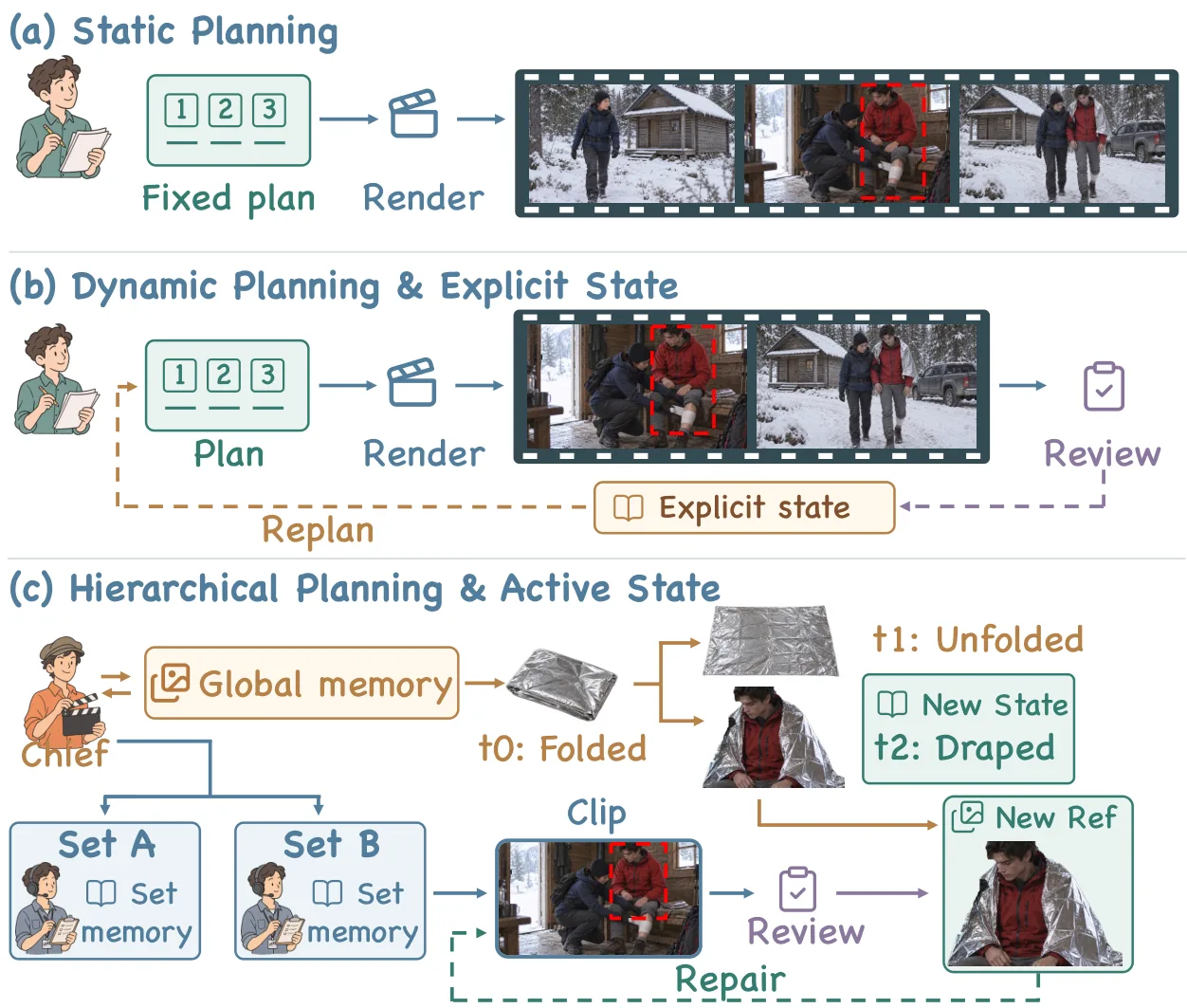
StateWeaver: multi-agent method for consistent long-form video generation
Researchers introduce StateWeaver, a multi-agent workflow for long video generation. It tracks story-state changes across shots and repairs visual references so characters and scenes stay consistent over time, and reports outperforming existing methods on several benchmarks.
Spotted a mistake? Email hello@capylaunch.com and we will correct it. How we make CapyLaunch TLDR News.