

S-Mind adds multi-view 3D geometry to multimodal LLMs
Muxin Fu, Peike Yu, Guibin Zhang and co-authors
S-Mind internalizes multi-view geometry in an MLLM through a compact set of spatial tokens that hold a fused 3D scene. It reports gains of up to 22.26 points on Qwen3.5 backbones across four spatial benchmarks.
Source: huggingface.co ↗ · By CapyLaunch
Quick facts
| Backbones | Qwen3.5 backbones |
|---|---|
| Gain | Up to 22.26 points over the backbones |
| Benchmarks | Four spatial benchmarks |
| Paper published | 2026-11-21 |
| Compared with | GPT-6-Astra (+0.45), Kimi-K3.1-Pro (+1.97), GLM-5.3-Flash (+7.80) in average accuracy |
What is it
S-Mind is a research method that adds multi-view 3D geometry to multimodal large language models (MLLMs). It uses a compact set of spatial tokens that hold a fused 3D scene. The paper is titled "S-Mind: Internalizing Multi-View Geometry for Spatial Intelligence".
How it works
S-Mind supervises a small set of spatial tokens so they hold the fused 3D scene. The model then re-emits these tokens to re-express the scene from each viewpoint the reasoning adopts.
Why it matters
Spatial reasoning from images matters as MLLMs move into the physical world. The authors report that MLLMs largely lack the ability to fuse views and shift viewpoints, even after spatial fine-tuning. S-Mind targets that gap directly inside the model.
For builders: If your product needs spatial reasoning from images, such as robotics or scene understanding, this suggests spatial tokens may fix gaps that fine-tuning alone leaves.
Who + how to try
For: Builders of products that need spatial reasoning from images, such as robotics or scene understanding.
Try:
FAQ
What does S-Mind change inside the model?
It adds a compact set of spatial tokens inside the MLLM. These tokens are supervised to hold the fused 3D scene and are re-emitted to re-express the scene from each viewpoint used in reasoning.
How much did it improve results?
The paper reports gains of up to 22.26 points on Qwen3.5 backbones across four spatial benchmarks. It also reports higher average accuracy than GPT-6-Astra (+0.45), Kimi-K3.1-Pro (+1.97), and GLM-5.3-Flash (+7.80).
Why might this matter for my product?
The authors suggest that spatial tokens may fix gaps that fine-tuning alone leaves. This could help products that need spatial reasoning from images, such as robotics or scene understanding.
Also new this week in Research
All 16 Research stories →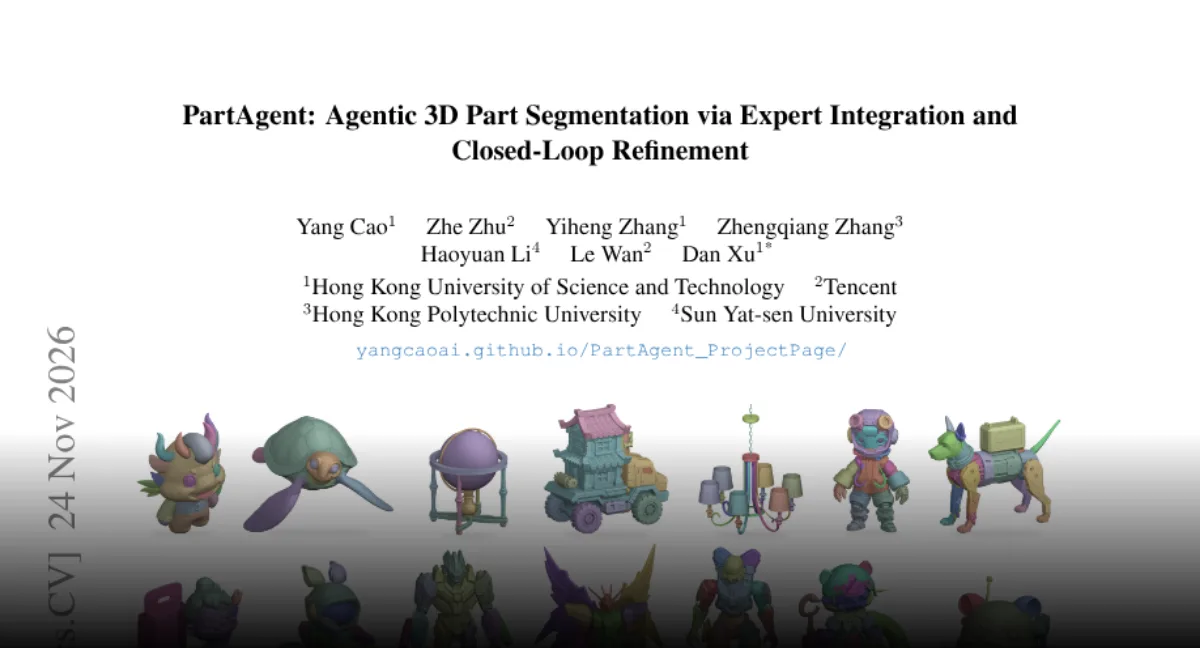
PartAgent: training-free agentic 3D part segmentation
PartAgent combines 3D expert region proposals with 2D semantic evidence in a training-free agent that refines part segmentations in a closed loop, reaching 68.41 mIoU on PartObjaverse-Tiny-WT.
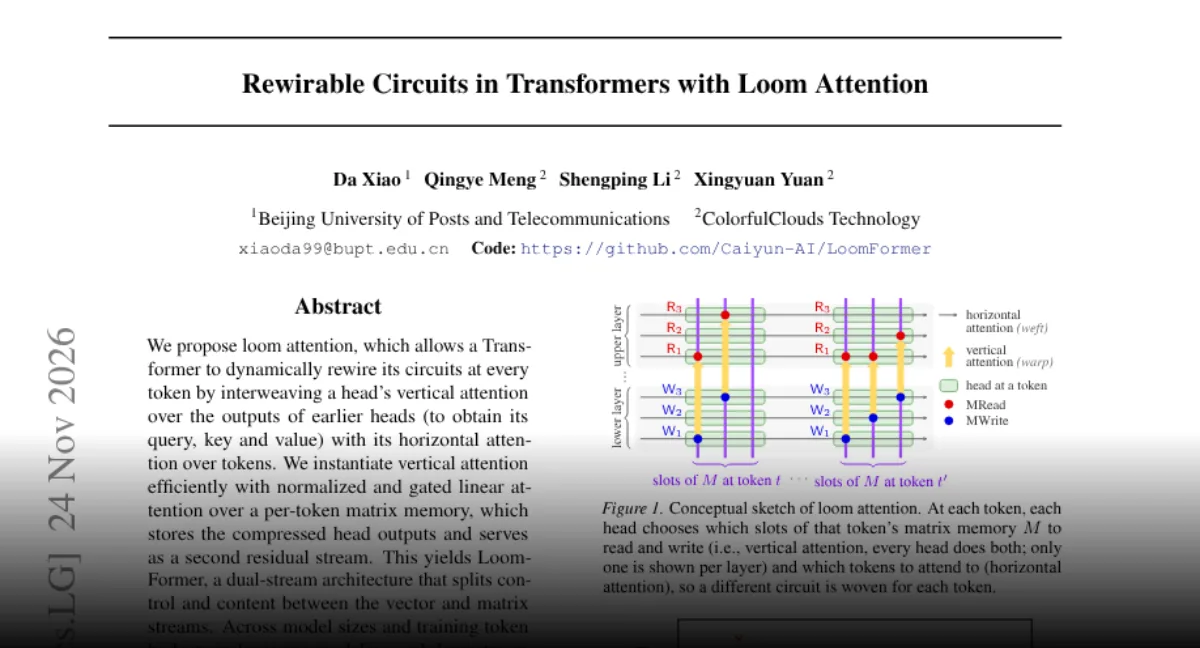
Loom attention lets Transformers rewire circuits per token
Researchers propose loom attention, letting a Transformer rewire its circuits at every token using a second matrix-memory stream. The resulting LoomFormer reportedly matches models trained with over 3x the compute at 2% extra FLOPs in their tests.
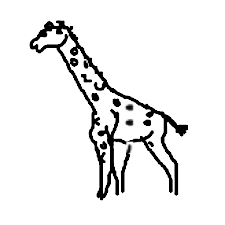
PenGPT: a generative transformer for handwriting and sketches
PenGPT is a generative transformer model for producing handwriting and sketches, shared on a personal blog and discussed on Hacker News.
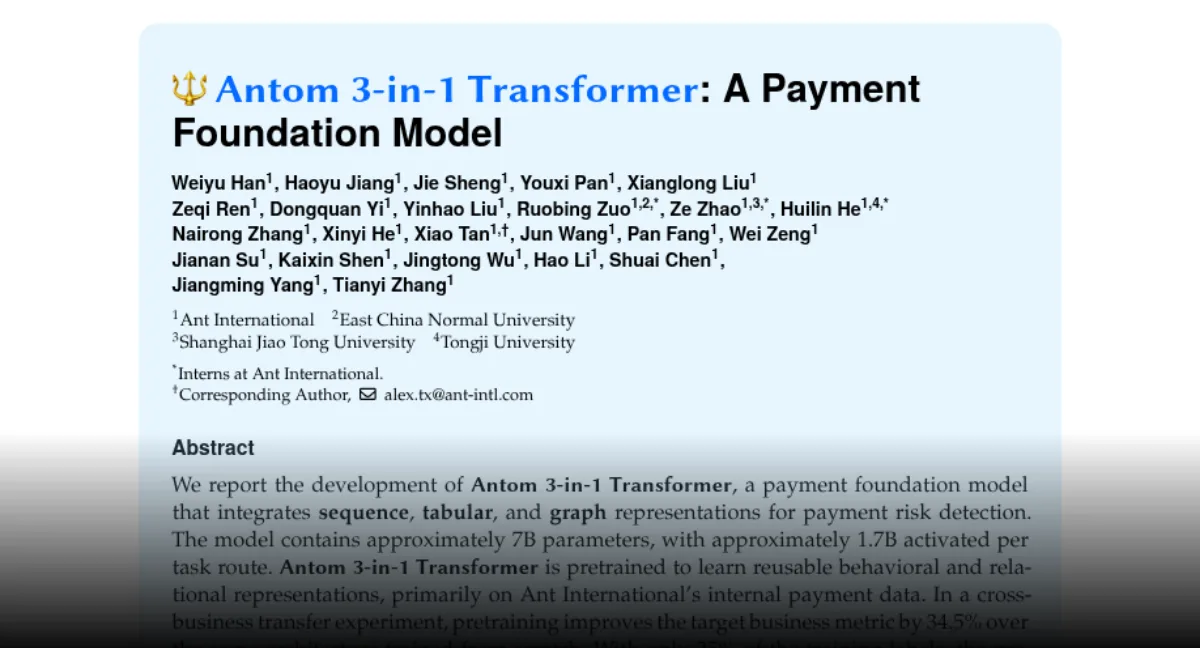
Antom 3-in-1 Transformer: a 7B payment risk foundation model
Ant International describes a roughly 7B-parameter payment foundation model combining sequence, tabular and graph representations for payment risk detection. Its paper reports a 37.88% drop in loss rate versus an online baseline in a four-month live test.
Spotted a mistake? Email hello@capylaunch.com and we will correct it. How we make CapyLaunch TLDR News.