

Anthropic shares a much shorter Lean verification of the GRH proof
Anthropic (repository by lsernau)
A GitHub repository by lsernau posts a much shorter version of a Lean formal verification of the Generalized Riemann Hypothesis work attributed to Anthropic. It drew 200 points on Hacker News.
Source: github.com ↗ · By CapyLaunch
Quick facts
| Maker | Anthropic, PBC (copyright holder); repo by lsernau |
|---|---|
| License | Apache 2.0 |
| Editions | Readable (about 300,000 lines); compact (about 76,000 lines) |
| Build requirement | Lean v4.35.0 and Mathlib at commit 56a00585 |
| Build time | One to two hours on 12 cores with 24 GB memory |
| Status | Passed machine checks only; not yet read through by a mathematician; not maintained |
| Community | 200 points on Hacker News; 152 stars on GitHub |
What is it
A GitHub repository called grh-lean posts a shorter Lean 4 formal proof of the Generalized Riemann Hypothesis for Dirichlet L-functions. The Riemann Hypothesis is also covered as a special case. The repository says the proof is built on Mathlib and is a shorter version of work by Levent Alpöge, produced with colleagues at Anthropic and Claude.
How it works
The proof is written in Lean 4 and checked by the Lean system. The repository says it uses only three standard axioms: propext, Classical.choice and Quot.sound. Each edition is its own Lake project, and the build needs Lean v4.35.0 and a specific Mathlib commit.
Why it matters
A machine-checked proof of this size shows how far formal verification in Lean has come. The repository lists two editions, a readable one of about 300,000 lines and a compact one of about 76,000 lines. For builders of proof tools or verified code, it is a concrete large-scale example to study.
For builders: Formal verification tooling in Lean is becoming a practical area to watch if you build tools for proofs or verified code.
Who + how to try
For: Developers and researchers working on formal verification, proof assistants or verified software in Lean.
Try:
FAQ
Is this proof accepted by mathematicians?
The repository says the proof has passed machine checks only. No mathematician has read it through, and no paper comes with it.
Is the project still maintained?
No. The repository is labeled a research artifact that is not maintained and not accepting contributions.
What axioms does the proof rely on?
The repository says it uses only propext, Classical.choice and Quot.sound.
How do I build it?
In either folder, run lake exe cache get, then lake build, then lake env lean scripts/PrintAxioms.lean. A build takes one to two hours on 12 cores with 24 GB of memory, or about 85 minutes more if the Mathlib cache is missing.
Also new this week in Research
All 26 Research stories →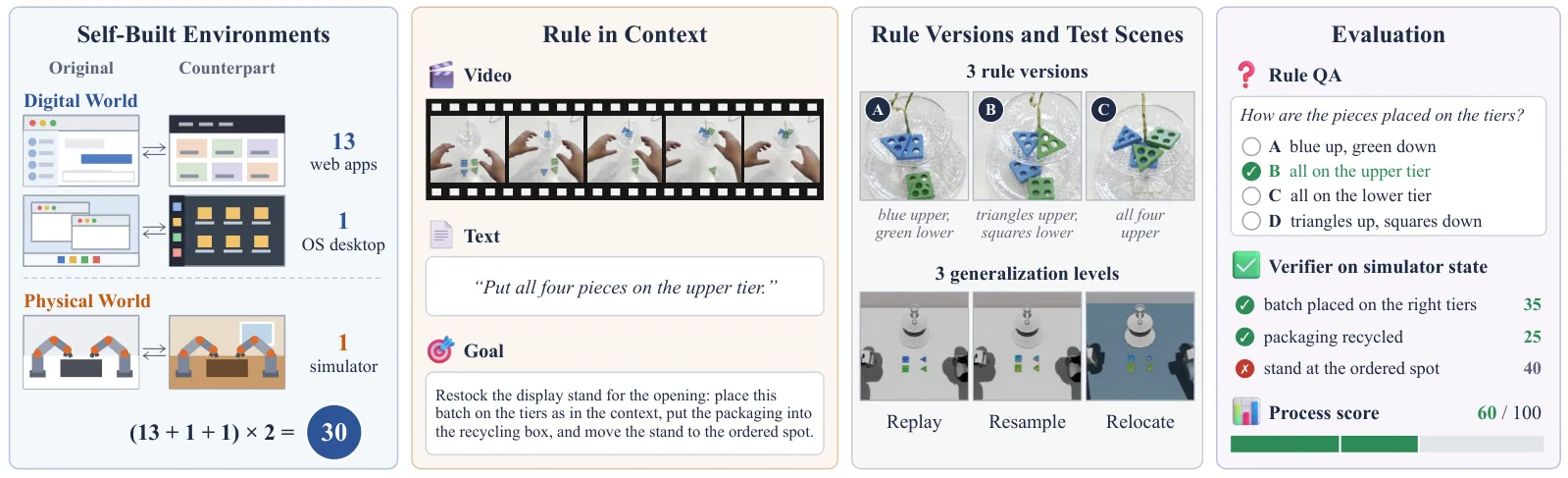
ICLWorld benchmark tests agents learning rules in context, from computers to robots
Researchers released ICLWorld, an online benchmark with 30 environments and 160 tasks that measures how well AI agents learn new rules from context. The strongest agents reached 82% and 76% success on computer-use runs but only 27% and 26% on robot-use runs.

Fireship: AI-generated Lean proof claims to tackle the Riemann Hypothesis
Fireship covers a 41-day conversation with Claude that produced 17 million lines of Lean code claiming to prove the Riemann Hypothesis. The video examines the claim.

Where scientists draw the line on AI agents
Hugging Face published a blog post on where scientists are setting boundaries for AI agents. The source text provided is empty, so the specific positions described are not available here.
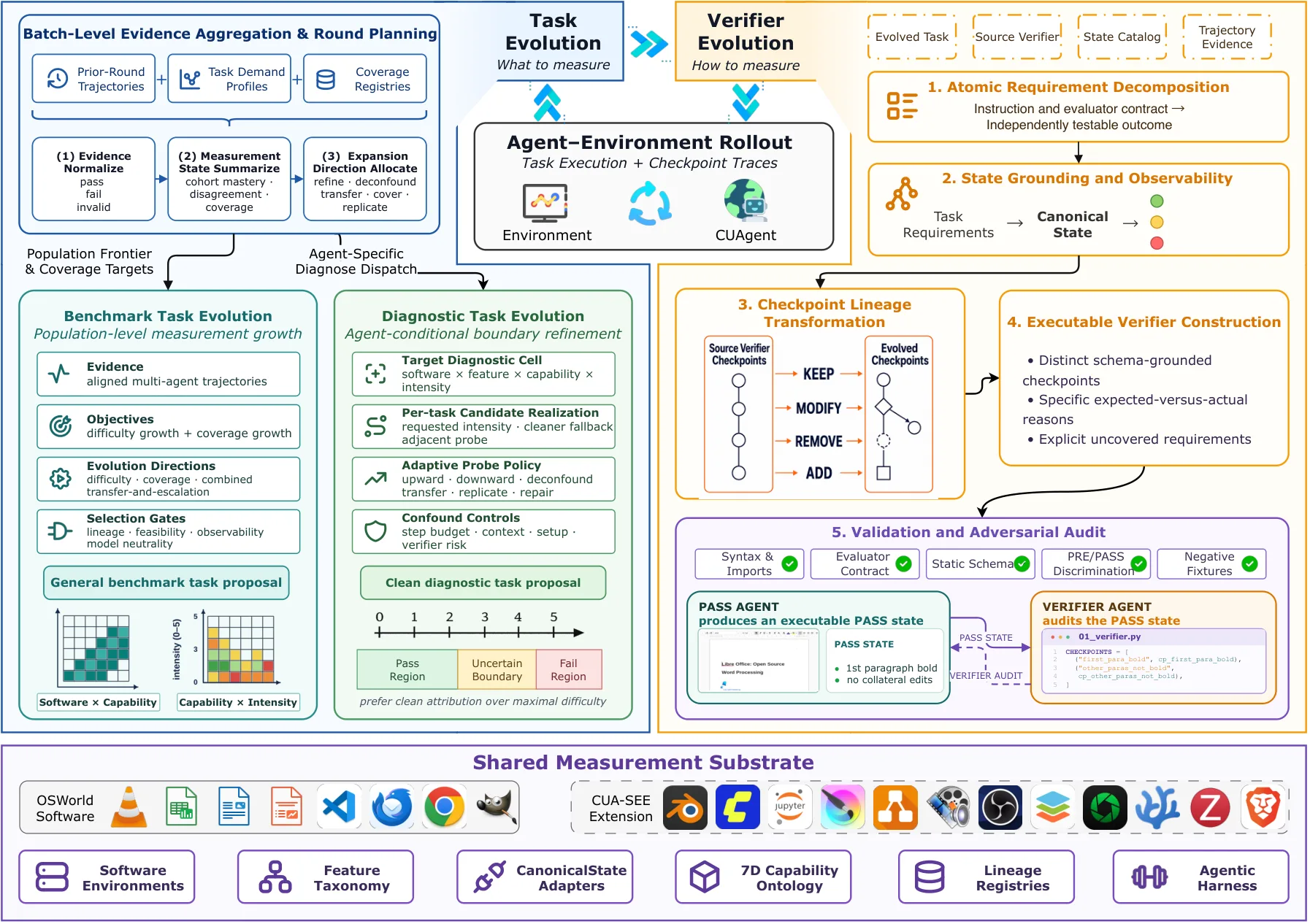
Research: CUA-SEE co-evolves tasks and verifiers for computer-use agent evaluation
A paper introduces CUA-SEE, an evaluation environment that generates new tasks and executable verifiers from rollout evidence, so benchmarks keep their difficulty and coverage as agents improve. It targets the weakness of static benchmarks for computer-use agents.
Spotted a mistake? Email hello@capylaunch.com and we will correct it. How we make CapyLaunch TLDR News.