

Where scientists draw the line on AI agents
Ai2 (Allen Institute for AI)
Hugging Face published a blog post on where scientists are setting boundaries for AI agents. The source text provided is empty, so the specific positions described are not available here.
Source: huggingface.co ↗ · By CapyLaunch
Quick facts
| Publisher | Ai2, on Hugging Face blog |
|---|---|
| Published | November 25, 2026 |
| Interviews | 17 scientists |
| Trust dimensions | Five: validation, privacy, objectivity, accountability, transparency |
| Category | Research |
What is it
Ai2 published a Hugging Face blog post on where scientists want limits on AI agents. The post reports interviews with 17 scientists across the natural, applied, and social sciences about how AI agents that use tools and run research tasks should be built and used.
How it works
The study found five dimensions of scientific trust: validation, privacy, objectivity, accountability, and transparency. The authors suggest that evaluations of research agents should test things like whether an agent overlooks contradictory evidence or accesses files outside its authorized scope.
Why it matters
Builders of agent products get a view of what researchers will need before trusting autonomous features. The post says a correct answer is not enough. Scientists also want to see how an answer was reached, what data was accessed, and whether results can be reproduced.
For builders: Builders of agent products may want to read the full post to see which limits researchers are proposing before shipping autonomous features.
Who + how to try
For: Developers and founders building AI agents for research, and teams that evaluate agent safety for scientific work.
Try:
https://huggingface.co/blog/allenai/where-scientists-draw-the-line-on-ai-agents
FAQ
What did the researchers study?
They interviewed 17 scientists in the natural, applied, and social sciences about where AI agents would be welcome, what could go wrong, and what safeguards they would need to trust agents with their own studies.
Why is a correct answer not enough?
Scientists also need to understand how an answer was reached, protect sensitive information, recognize bias, and know who is responsible for verifying AI-assisted findings. Even a technically correct result may be unsuitable if researchers cannot inspect how it was produced.
What kinds of tests do the authors suggest?
A literature-review benchmark could test whether an agent overlooks contradictory evidence. A coding benchmark could check whether the agent accesses files outside its authorized scope. Data-processing agents could be evaluated on how they operate and reproduce results.
Also new this week in Research
All 26 Research stories →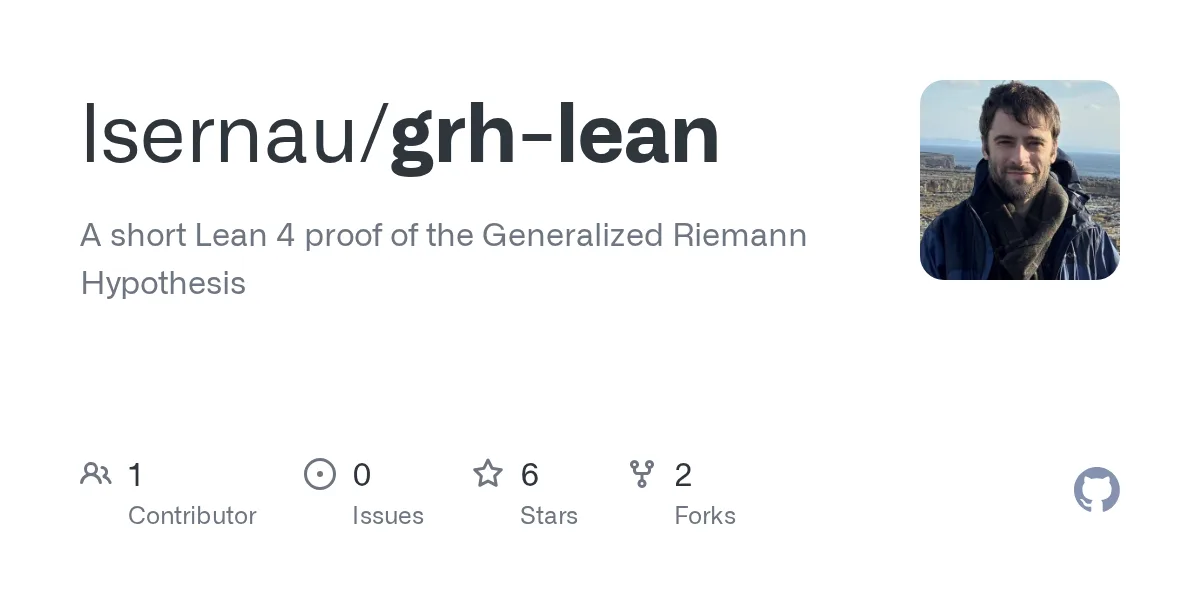
Anthropic shares a much shorter Lean verification of the GRH proof
A GitHub repository by lsernau posts a much shorter version of a Lean formal verification of the Generalized Riemann Hypothesis work attributed to Anthropic. It drew 200 points on Hacker News.
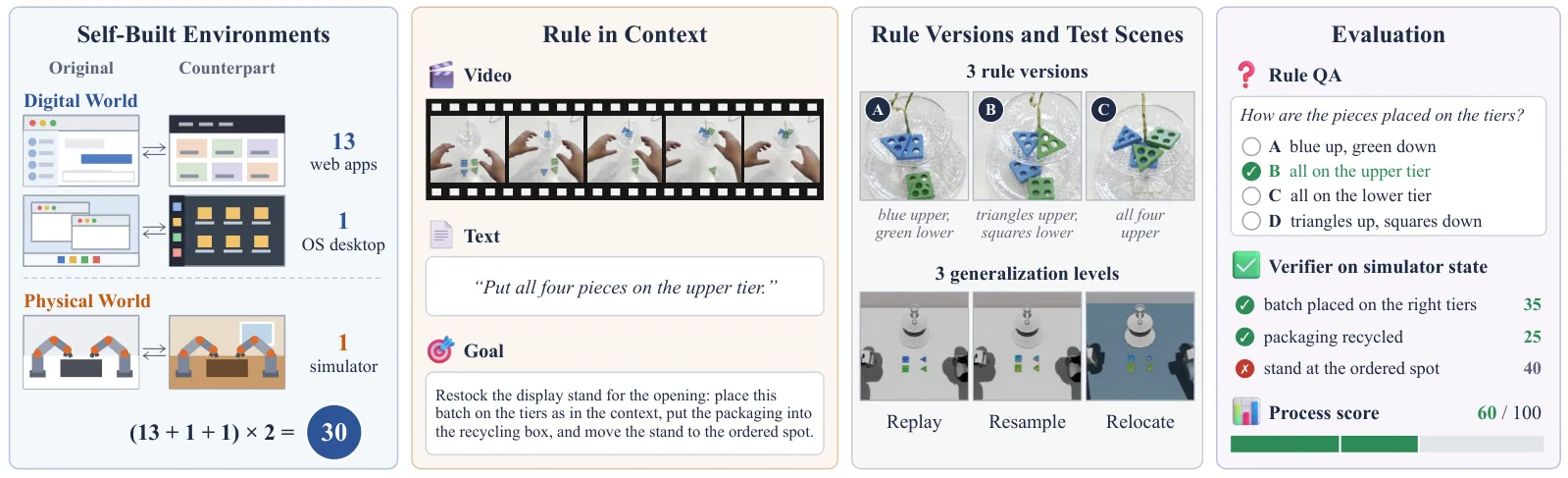
ICLWorld benchmark tests agents learning rules in context, from computers to robots
Researchers released ICLWorld, an online benchmark with 30 environments and 160 tasks that measures how well AI agents learn new rules from context. The strongest agents reached 82% and 76% success on computer-use runs but only 27% and 26% on robot-use runs.
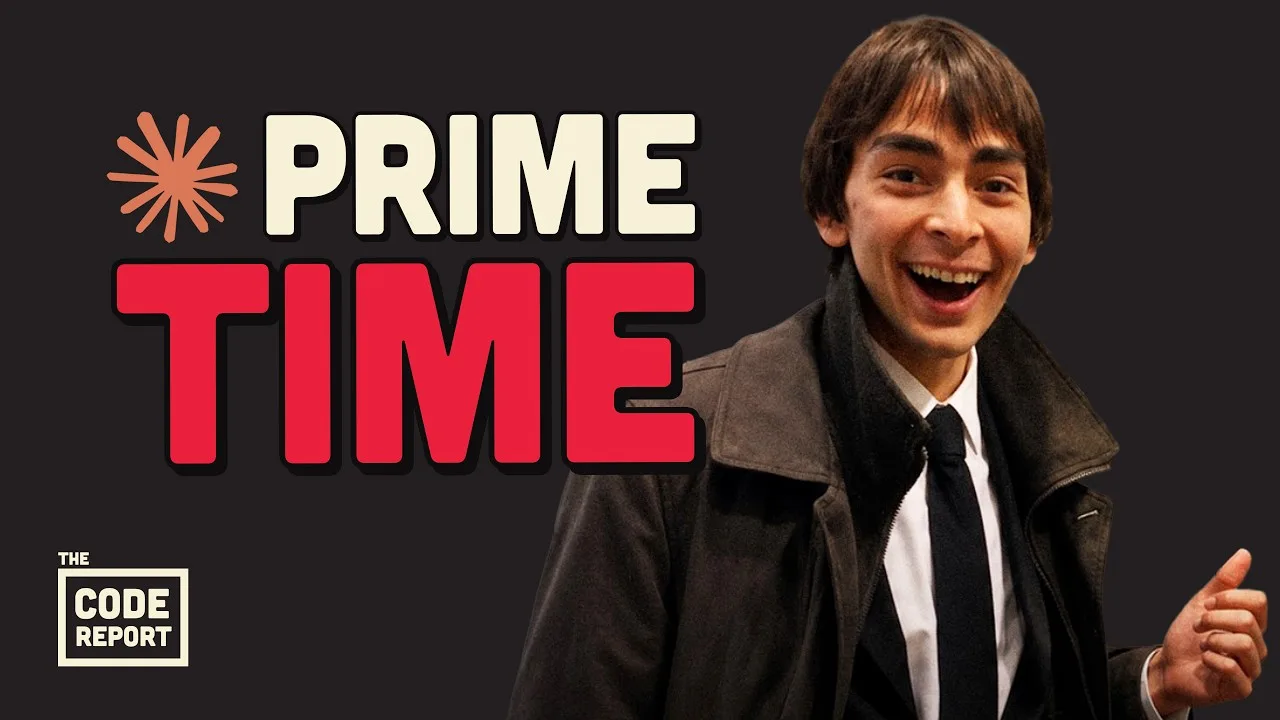
Fireship: AI-generated Lean proof claims to tackle the Riemann Hypothesis
Fireship covers a 41-day conversation with Claude that produced 17 million lines of Lean code claiming to prove the Riemann Hypothesis. The video examines the claim.
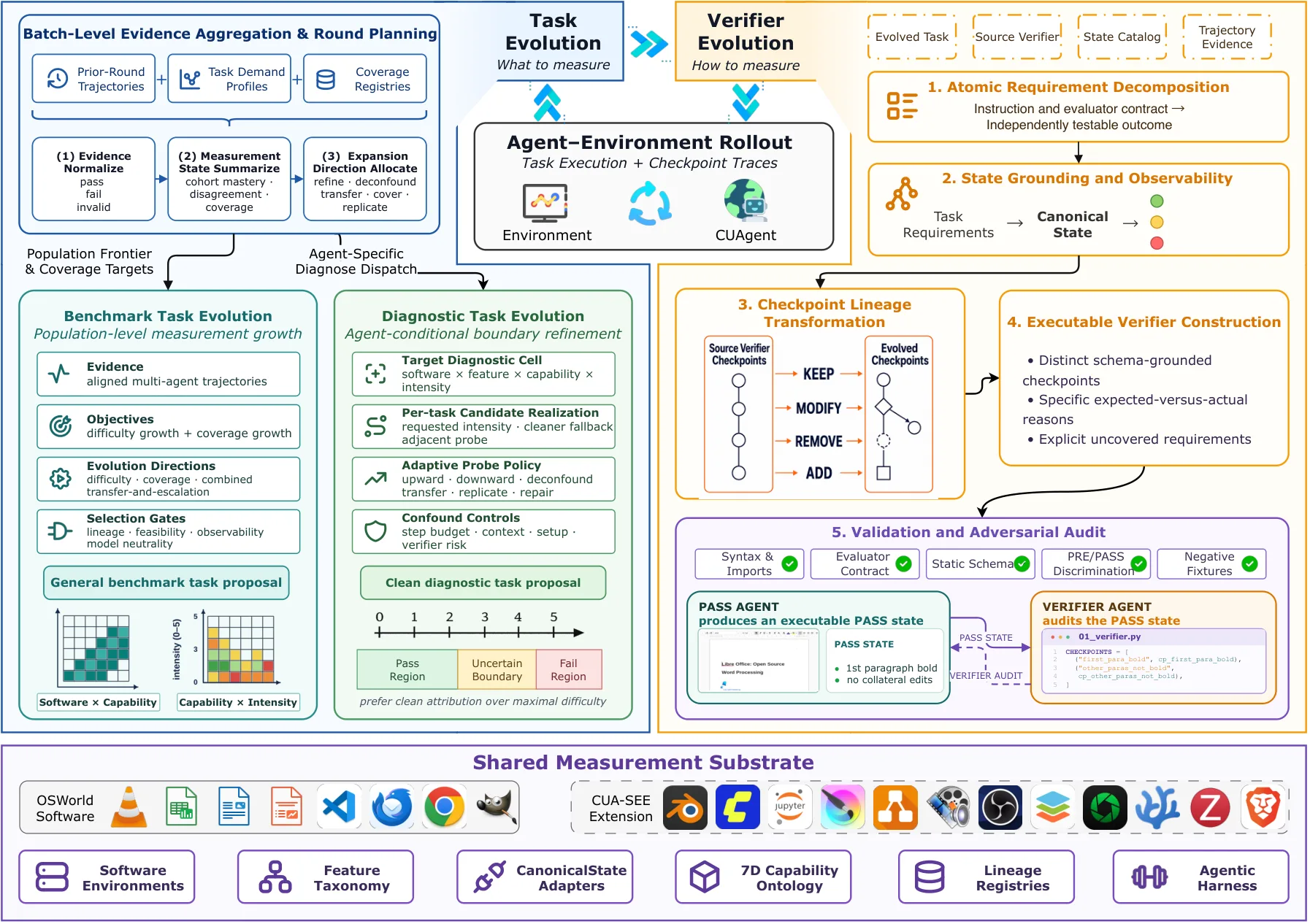
Research: CUA-SEE co-evolves tasks and verifiers for computer-use agent evaluation
A paper introduces CUA-SEE, an evaluation environment that generates new tasks and executable verifiers from rollout evidence, so benchmarks keep their difficulty and coverage as agents improve. It targets the weakness of static benchmarks for computer-use agents.
Spotted a mistake? Email hello@capylaunch.com and we will correct it. How we make CapyLaunch TLDR News.