

ICLWorld benchmark tests agents learning rules in context, from computers to robots
Qingle Liu and co-authors (Hugging Face paper page)
Researchers released ICLWorld, an online benchmark with 30 environments and 160 tasks that measures how well AI agents learn new rules from context. The strongest agents reached 82% and 76% success on computer-use runs but only 27% and 26% on robot-use runs.
Source: huggingface.co ↗ · By CapyLaunch
Quick facts
| Environments | 30 self-built environments |
|---|---|
| Tasks | 160 tasks with three rule versions each |
| Demonstrations | 630 videos, 10+ hours |
| Top computer-use success | 82% (Claude Opus 5.5) and 76% (GPT-6 Astra) |
| Top robot-use success | 27% (Claude Opus 5.5) and 26% (GPT-6 Astra) |
| Robot rule questions | GPT-6 Astra answers 98% correctly but completes 20% of tasks |
What is it
ICLWorld is an online benchmark that tests whether AI agents can learn new rules from context. It covers both computer use and robot use. It includes 30 environments, 160 tasks, and 630 demonstration videos.
How it works
Each task comes with three rule versions, given as text or video. Generalization is tested at three levels: replaying the demonstration, new instances, and relocated setups. All environments run through one harness called UIverse, which turns each environment into a user interface.
Why it matters
Existing in-context learning benchmarks are mostly offline, rely on text or static images, and risk training-data contamination. Robot evaluations were limited to method-level ablations, so this benchmark fills a gap. For builders, the results show a large gap between computer-use and robot-use performance.
For builders: If you build agents that go beyond screens, expect a large gap between computer-use and robot-use performance, so test physical or robot workflows separately before trusting them.
Who + how to try
For: Builders of AI agents that go beyond screens and need to know how well those agents learn rules from context.
Try:
FAQ
What does ICLWorld measure?
It measures how well AI agents learn new rules from context and follow them, across computer use and robot use.
Why is this benchmark different from earlier ones?
Earlier in-context learning benchmarks are mostly offline, text or static image based, and prone to contamination. ICLWorld is online and covers physical robot tasks as well.
What is the main takeaway for builders?
Agents performed much better on computer-use runs than on robot-use runs, so physical or robot workflows should be tested separately before being trusted.
Also new this week in Research
All 26 Research stories →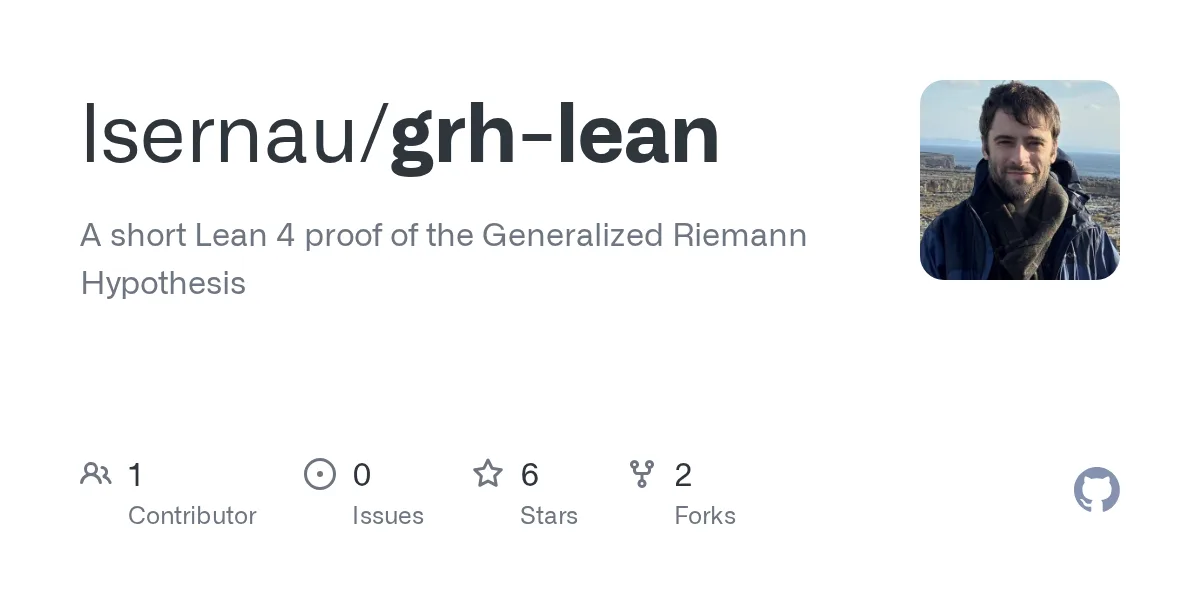
Anthropic shares a much shorter Lean verification of the GRH proof
A GitHub repository by lsernau posts a much shorter version of a Lean formal verification of the Generalized Riemann Hypothesis work attributed to Anthropic. It drew 200 points on Hacker News.

Fireship: AI-generated Lean proof claims to tackle the Riemann Hypothesis
Fireship covers a 41-day conversation with Claude that produced 17 million lines of Lean code claiming to prove the Riemann Hypothesis. The video examines the claim.
Where scientists draw the line on AI agents
Hugging Face published a blog post on where scientists are setting boundaries for AI agents. The source text provided is empty, so the specific positions described are not available here.
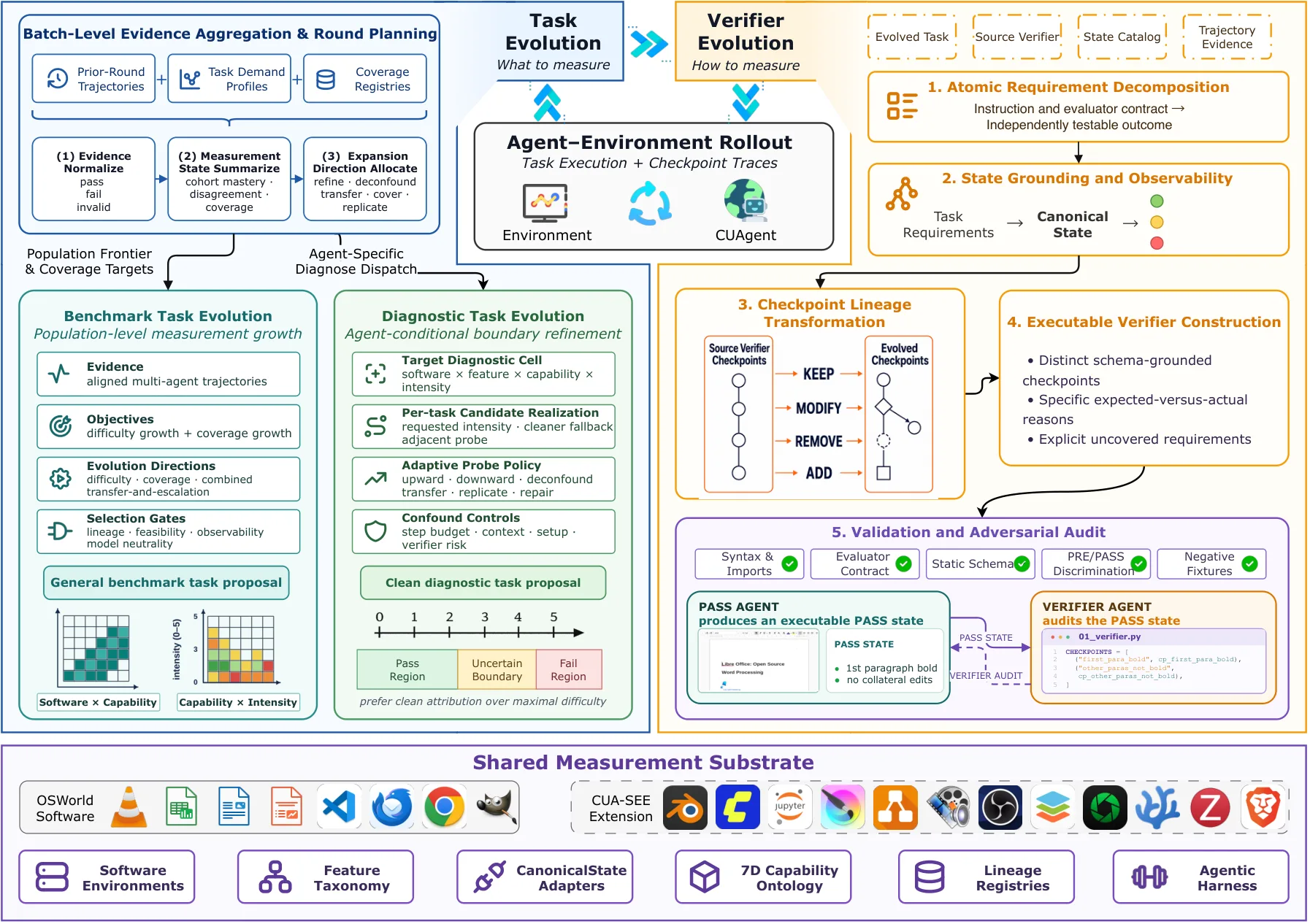
Research: CUA-SEE co-evolves tasks and verifiers for computer-use agent evaluation
A paper introduces CUA-SEE, an evaluation environment that generates new tasks and executable verifiers from rollout evidence, so benchmarks keep their difficulty and coverage as agents improve. It targets the weakness of static benchmarks for computer-use agents.
Spotted a mistake? Email hello@capylaunch.com and we will correct it. How we make CapyLaunch TLDR News.