

PyRUA-Dex: coding agents write programs for two-hand robot dexterity
DAGroup-PKU
PyRUA-Dex lets coding agents build dexterous bimanual manipulation policies as programs, without human demonstrations. The authors report state-of-the-art results on Bench2Dex and DexJoCo and show a robot playing piano and writing calligraphy.
Source: huggingface.co ↗ · By CapyLaunch
Quick facts
| Paper | PyRUA-Dex: Learning Programmatic Policies for Dexterous Bimanual Manipulation with Coding Agents |
|---|---|
| Published | 2026-11-24 |
| Code | github.com/DAGroup-PKU/PyRUA-Lean (dex branch) |
| Benchmarks | Bench2Dex and DexJoCo |
What is it
PyRUA-Dex is a framework that lets coding agents write programmatic control policies for dexterous bimanual manipulation, meaning robot tasks that use two hands. The policies are built as programs rather than trained from human demonstrations. The authors report state-of-the-art results on the Bench2Dex and DexJoCo benchmarks and show a robot playing piano and writing calligraphy.
How it works
The programmatic policy is developed in two stages. During exploration, multiple agents explore in parallel for task skills and ways to compose them, and a distilling agent condenses the successful attempts into a task library and one program. During refinement, this program is improved through randomized l
Why it matters
Learning dexterous manipulation is limited by the scarcity of high-quality demonstrations. Retargeting from human video is imprecise, teleoperation gives no force feedback, and exoskeleton collection is hard to scale. For builders in robotics or agent-driven automation, this suggests coding agents can produce control programs for hard tasks without that expensive demonstration data.
For builders: If you work on robotics or agent-driven automation, this shows coding agents can produce control programs for hard tasks, reducing the need for expensive demonstration data.
Who + how to try
For: Robotics researchers and engineers, and builders working on agent-driven automation of dexterous manipulation.
Try:
FAQ
Does PyRUA-Dex need human demonstrations?
No. The framework develops dexterous manipulation through programmatic policy without the need of demonstrations.
What problem is it trying to solve?
Learning for dexterous manipulation is limited by the scarcity of high-quality demonstrations. Retargeting from human video is imprecise, teleoperation gives no force feedback to the operator, and exoskeleton-based collection is hard to scale up.
How are the agents organized?
During exploration, multiple agents explore in parallel for task skills and ways to compose them. A distilling agent condenses the successful attempts into a task library and one program.
What results do the authors report?
The authors report state-of-the-art results on Bench2Dex and DexJoCo and show a robot playing piano and writing calligraphy.
Also new this week in Research
All 27 Research stories →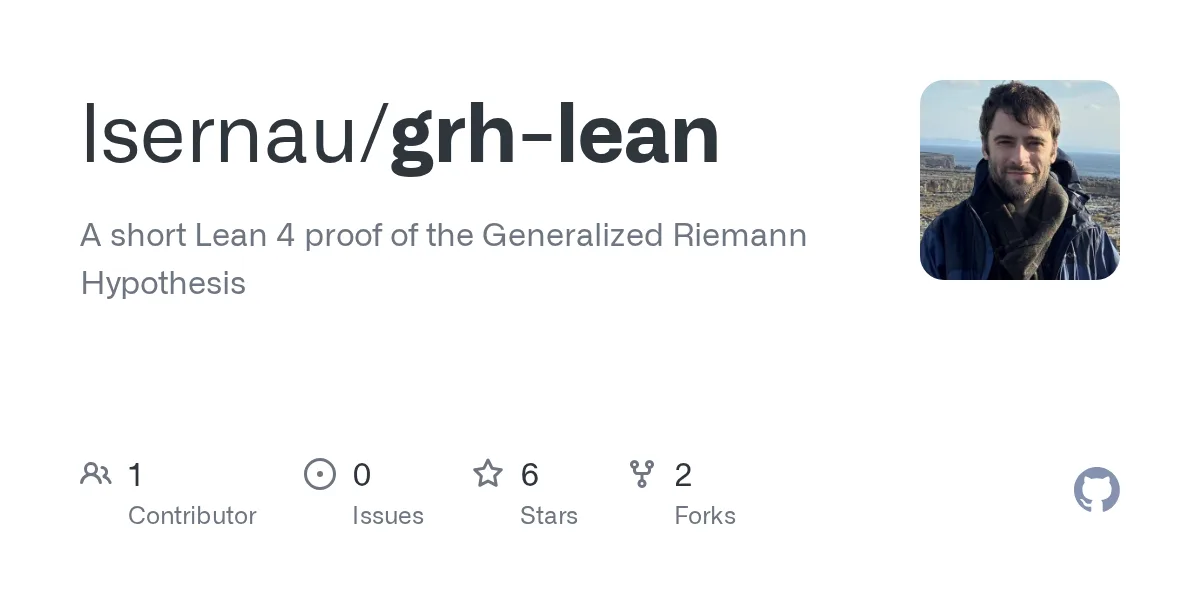
Anthropic shares a much shorter Lean verification of the GRH proof
A GitHub repository by lsernau posts a much shorter version of a Lean formal verification of the Generalized Riemann Hypothesis work attributed to Anthropic. It drew 200 points on Hacker News.
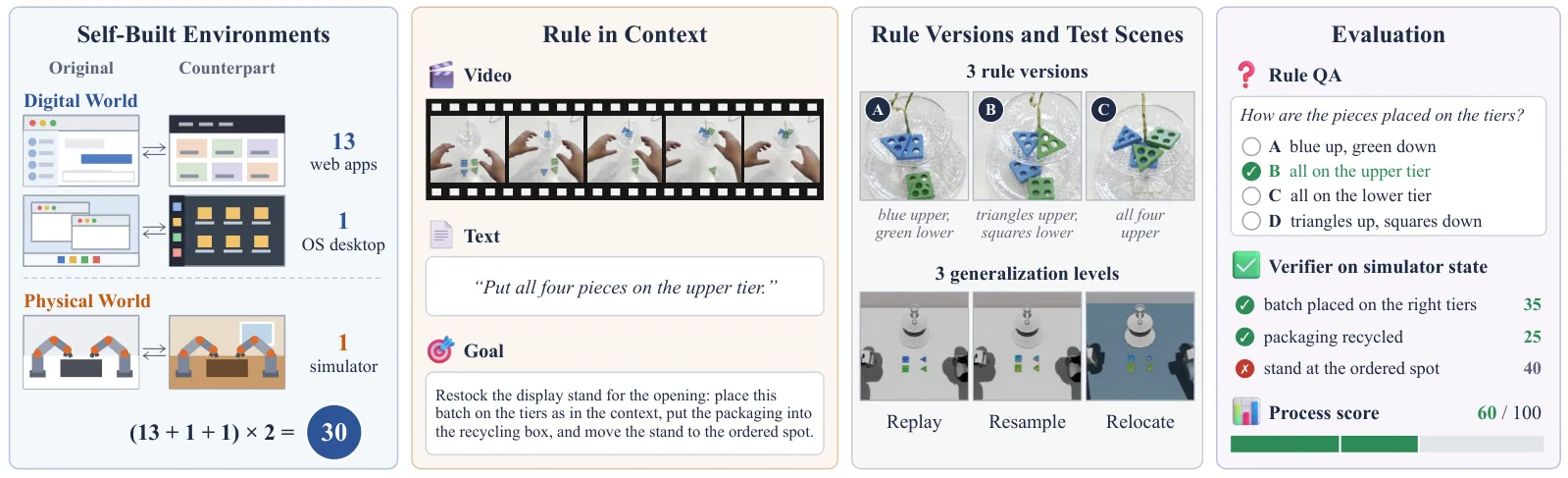
ICLWorld benchmark tests agents learning rules in context, from computers to robots
Researchers released ICLWorld, an online benchmark with 30 environments and 160 tasks that measures how well AI agents learn new rules from context. The strongest agents reached 82% and 76% success on computer-use runs but only 27% and 26% on robot-use runs.

Fireship: AI-generated Lean proof claims to tackle the Riemann Hypothesis
Fireship covers a 41-day conversation with Claude that produced 17 million lines of Lean code claiming to prove the Riemann Hypothesis. The video examines the claim.
Where scientists draw the line on AI agents
Hugging Face published a blog post on where scientists are setting boundaries for AI agents. The source text provided is empty, so the specific positions described are not available here.
Spotted a mistake? Email hello@capylaunch.com and we will correct it. How we make CapyLaunch TLDR News.